
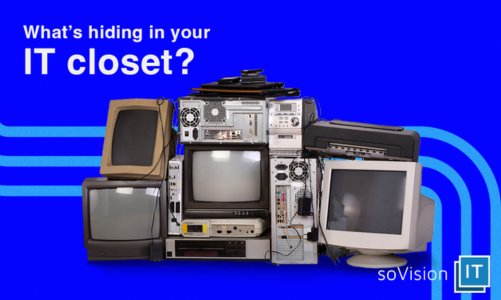
What’s Hiding in Your IT Closet?
When was the last time you opened that one closet you try not to think about?
You know the one. The door closes fine, and nothing spills out when you walk by, but you don’t open it unless you absolutely have to.
Inside, there’s a mix of things you’re not sure what to do with but “need” to hold on to. It’s where you throw random things when company is coming rather than put away. It’s not overflowing. It’s just crowded. And because its contents are out of sight, they’re also out of mind.
That’s exactly how IT clutter builds in most businesses. Everything appears tidy from the outside, but inside it’s a disorganised mystery.
How IT clutter builds without anyone noticing
IT clutter grows without anyone noticing: A new tool gets added to solve a problem. Another system comes in as the business grows. A quick workaround helps everyone move faster during a busy stretch. An older application stays in place because no one wants to risk removing something that still appears to work.
Each decision makes sense in the moment, but nothing is viewed holistically. Because nothing is visibly broken, there’s no pressure to simplify. Over time, small, reasonable decisions turn into a web of complexity.
Messy IT isn’t a sign of failure. In many cases, it’s a sign your business has been moving fast.
What’s commonly hiding in the IT closet?
The IT closets we’re referring to in this post are metaphorical, not literal, closets, and they look surprisingly similar.
You’ll find:
· Tools no one really uses anymore
· Multiple systems doing the same job
· Old software that’s “always been there”
· Former employee access that was never removed
· Quick fixes that quietly became permanent
None of this feels dramatic, making it easy to ignore.
If this sounds familiar, you’re not alone.
Why hidden IT clutter slows the business down
Clutter doesn’t always cause an obvious breakdown. Instead, it causes friction.
People aren’t sure which system to use. Decisions take longer because information is scattered across too many places. Time is wasted maintaining tools that don’t add much value. Costs creep up in small ways that don’t trigger alarms.
Individually, these issues feel minor, but together, they add weight to everyday work.
Clutter doesn’t break the business. It quietly weighs it down.
The risk of never cleaning it out
The longer clutter sits, the harder it becomes to deal with.
Outdated systems become harder to support over time. Tools that were added for a specific purpose are eventually forgotten until something changes and they suddenly matter again. Workarounds stick around long after anyone remembers why they were created, and now the business depends on them.
Ignoring the mess doesn’t stop it from growing. It just makes future cleanups more complicated.
When systems and processes aren’t regularly reviewed, surprises become more likely, and surprises don’t happen at convenient times.
Spring cleaning your IT isn’t about starting over
Cleaning out your IT closet doesn’t mean ripping everything out and starting from scratch.
It’s about decluttering with intention. Keep what works and organise what’s useful but also know when you need to retire or replace what no longer serves your business.
The goal isn’t disruption. It’s clarity.
Making room for growth
A clean IT environment makes your workplace feel different. Your team knows where things live. Systems support decisions instead of slowing them down. Changes feel manageable instead of risky. Growth feels intentional rather than reactive.
When clutter is under control, your business has room to grow.
Start with visibility
You don’t have to make changes right away.
Start by opening the door. Take a closer look at what’s in your IT environment — see what’s being used, what’s overlapping and what’s been forgotten.
Clarity always comes before change.
If you’d like a second set of eyes, we can explore together in a short discovery call. We’ll help you identify what’s worth keeping, what can go and what’s quietly getting in the way.